




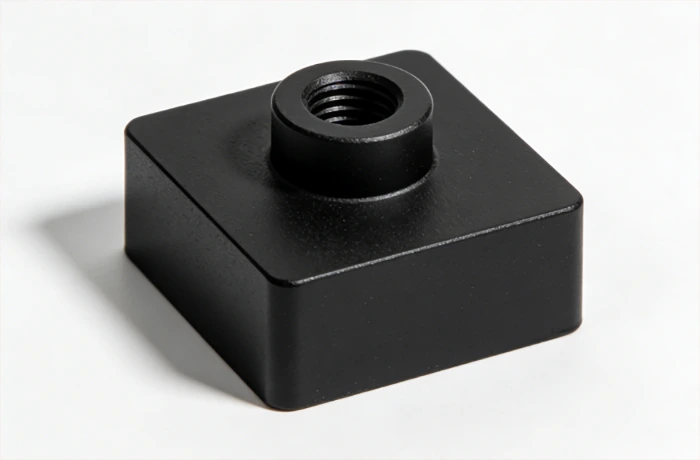
ABS-Like Black (Accura 7820)
Design of mechanical and functional tests. Its comprehensive performance is comparable to that of traditional injection-molded ABS plastic, featuring excellent mechanical strength, dimensional stability, and surface texture. Its dark black color and smooth upper surface can highly simulate the injection-molded appearance of mass-produced components.
- Waterproofing: Has moderate waterproofing properties. Suitable for general humid environments, but not recommended for long-term use in humid conditions or in contact with water.
- Durability: Exhibits excellent impact resistance and fatigue resistance, suitable for assembly testing, display models, and prototype verification under moderate loads.
- Dimensional stability: The molding shrinkage rate is low, and the parts undergo minimal deformation during long-term use, making it suitable for prototype production with high precision requirements.
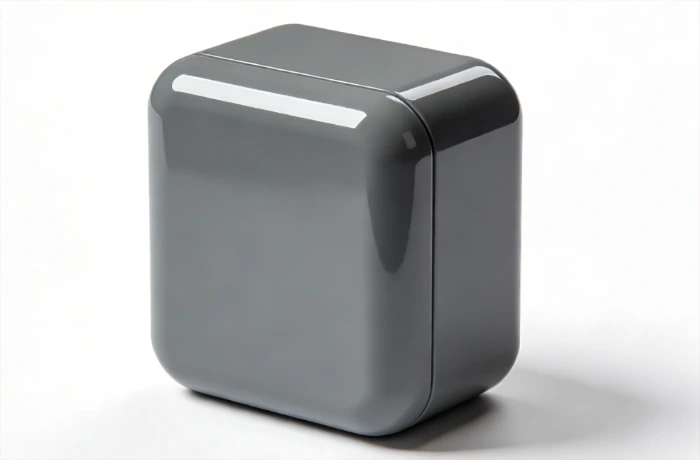
ABS-Like Gray (Accura Xtreme Gray)
Class ABS Grey is a high-performance and versatile photopolymer resin based on SLA (Stereolithography) technology. It is widely used due to its excellent comprehensive mechanical properties, good dimensional stability, and texture similar to injection-molded ABS. This material excels in toughness, heat resistance, and the stability of forming large-sized parts, and is particularly suitable for functional prototypes, assembly test pieces, and small to medium batch end products that require certain flexibility and durability.
- Balance of strength and toughness: Exhibits a high elongation at break, with excellent impact resistance and fatigue resistance.
- Large size stability: Low shrinkage rate and low internal stress, suitable for manufacturing large-sized or complex-structured parts, and less prone to deformation or cracking.
- Heat resistance: The heat distortion temperature is relatively high, enabling it to be used for a short period of time in certain temperature environments.
- Surface quality: The formed surface is fine and can be directly used for appearance display or assembly verification.
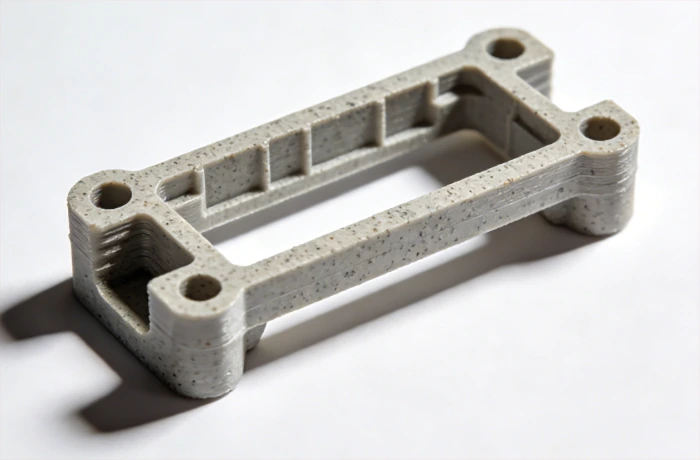
PA 12 Mineral-Filled (PA620-MF)
This material is a high-performance nylon composite fabricated using the SLS (Selective Laser Sintering) process and containing 25% mineral fillers. It has the highest stiffness and heat resistance among Protolabs’ SLS material systems. While maintaining good strength and dimensional stability, it is particularly suitable for the production of functional components with strict requirements for rigidity, durability in high-temperature environments, and long-term dimensional accuracy.
- High stiffness: Mineral fillers significantly enhance the rigidity of the material, and have strong resistance to bending deformation.
- High temperature resistance: The heat distortion temperature is high, allowing the product to maintain stable performance even in continuous or short-term high-temperature environments.
- Excellent dimensional stability: low moisture absorption and low shrinkage rate, suitable for manufacturing precise engineering components.
- Overall durability: Combining excellent fatigue strength with long-term usage stability.
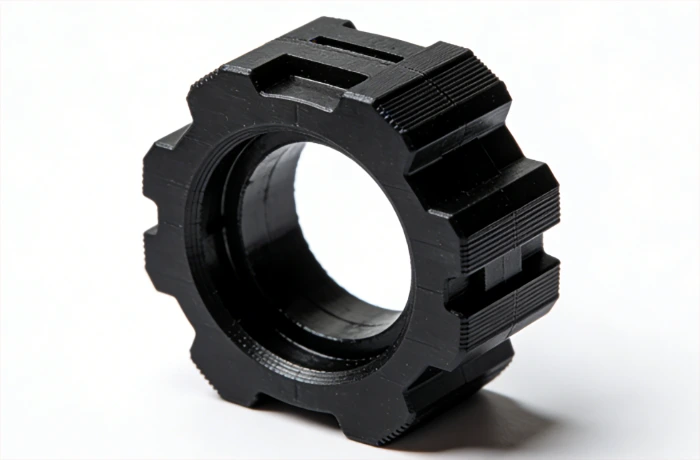
PA11 Black (PA850)
PA11 Black is a high-performance nylon material produced by the SLS (Selective Laser Sintering) process. It is renowned for its excellent toughness, high elongation at break, and good heat resistance. While maintaining a high tensile strength, it offers one of the best ductility among nylon SLS materials, making it suitable for functional components that need to withstand repeated bending, impacts, or high-temperature environments.
- High flexibility and extensibility: The elongation at break is significantly higher than that of ordinary nylon materials, enabling it to withstand considerable deformation without easily breaking.
- High temperature resistance: The heat distortion temperature is high, making it suitable for continuous or intermittent operation in high-temperature environments.
- Excellent durability: Outstanding fatigue resistance and impact resistance, suitable for dynamic load applications.
- Dimensional stability: Low moisture absorption and low molding shrinkage rate, maintaining the long-term dimensional accuracy of the parts.
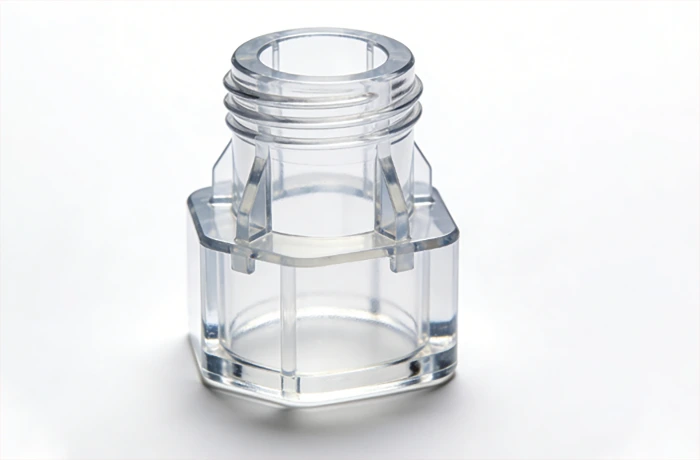
PC-Like Advanced High Temp (Accura 5530)
PC type high-temperature material is a high-performance engineering resin based on the SLA (Stereolithography) process. Its comprehensive performance is close to that of polycarbonate (PC). This material excels in strength, stiffness, and high-temperature resistance, making it particularly suitable for manufacturing functional prototypes, tooling fixtures, and end-use components that need to maintain structural stability under high loads or high-temperature conditions. Through post-heat curing, its heat deformation temperature can be significantly increased, but the material’s toughness will correspondingly decrease.
- High strength and high rigidity: Exhibits excellent load-bearing capacity and resistance to deformation in SLA materials.
- Excellent high-temperature resistance: The base thermal deformation temperature is already quite high. After heat curing, it can withstand even more extreme short-term high-temperature environments.
- Excellent dimensional stability and moisture resistance: Low hygroscopicity, ensuring that the parts can maintain stable dimensions and performance even in humid or hot environments.
- Translucent appearance: The molded part is in a translucent state, suitable for applications such as low-requirement optical observation or prototype of light-guiding components.
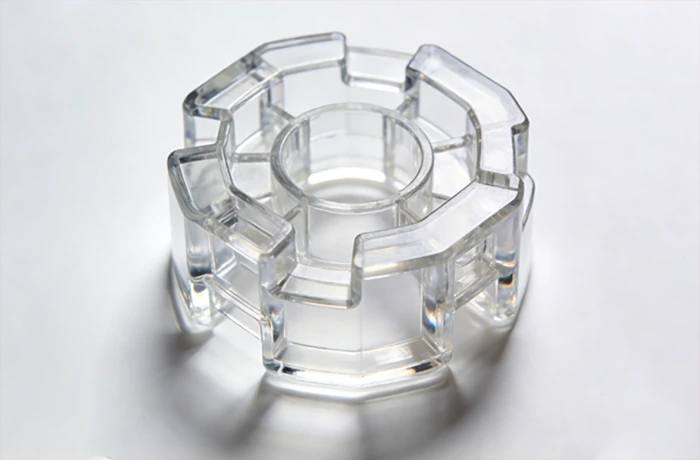
PC-Like Translucent/Clear (Accura 60)
Class PC transparent material is a high-performance resin based on the SLA (Stereolithography) process. It is renowned for its excellent transparency, high hardness and good dimensional stability. Its mechanical properties are close to those of injection-molded polycarbonate (PC), making it an ideal choice for creating functional prototypes, transparent casings and large-scale display models that require both optical clarity and structural strength.
- Excellent optical performance: The molded parts are in a semi-transparent to transparent state, and high optical clarity can be achieved through post-processing such as fine polishing.
- High hardness and high strength: Possess excellent surface hardness, tensile strength and rigidity, with strong resistance to scratching and excellent load-bearing capacity.
- Excellent large-size stability: low shrinkage rate and low internal stress, suitable for manufacturing large-sized or complex-structured transparent parts, and not prone to deformation or warping.
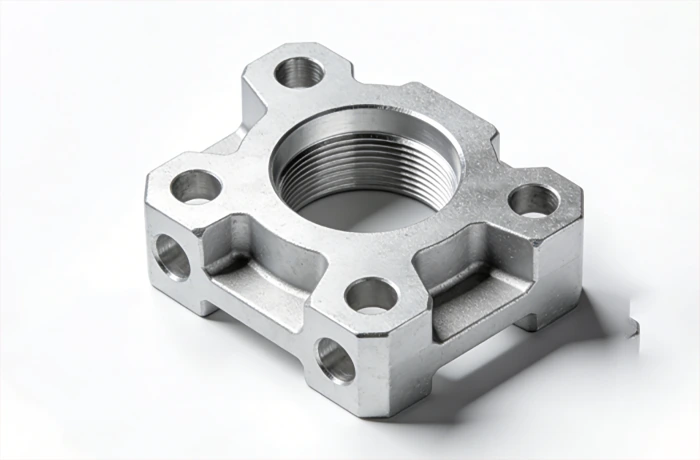
Aluminum
This material is formed from AlSi10Mg aluminum alloy powder through the DMLS (Direct Metal Laser Sintering) process. Its composition and properties are similar to those of traditional cast and die-cast aluminum alloys (such as A360, etc.). This material exhibits excellent specific strength, heat resistance, and corrosion resistance, and possesses outstanding fatigue, creep, and fracture strengths. It is particularly suitable for manufacturing lightweight, structurally complex functional components that require high stiffness and dimensional stability. The following performance data are typical values after stress-relief heat treatment.
- Excellent lightweight-to-strength ratio: Achieving high rigidity and strength while significantly reducing component weight.
- Excellent dimensional stability and accuracy: Suitable for manufacturing large-sized or structurally complex integrated components.
- Heat resistance and corrosion resistance: The performance can remain stable even in moderate high temperatures and corrosive environments.
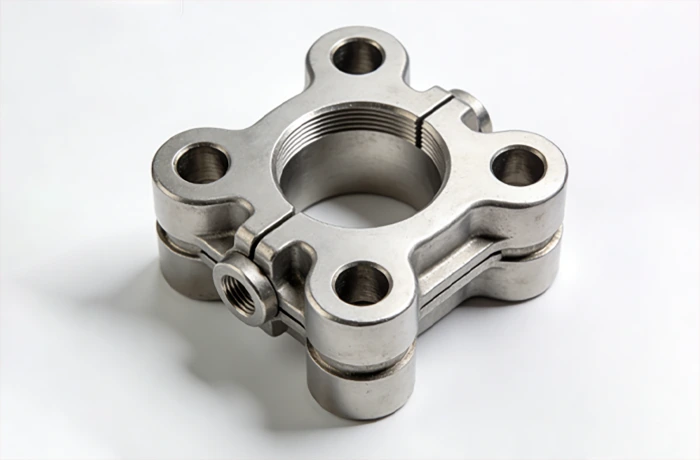
Stainless Steel 316L
316L stainless steel is a high-performance austenitic stainless steel material formed by the DMLS (Direct Metal Laser Sintering) process. With its outstanding corrosion resistance, excellent comprehensive mechanical properties, and printing reliability, it has become one of the preferred materials for manufacturing acid-resistant, corrosion-resistant, and long-service functional components. The printed parts usually require stress relief treatment to release internal stress, stabilize dimensions, and optimize corrosion resistance. The following performance data are typical values after stress relief heat treatment.
- Excellent corrosion resistance: Performs well in acidic, chloride-containing and various chemical media, suitable for harsh corrosive environments.
- High strength and high ductility: Combining high tensile strength with extremely high elongation at break, it has strong impact resistance and excellent energy absorption capability.
- Excellent dimensional stability and printing accuracy: Suitable for manufacturing complex-structured, thin-walled or integrated internal channel integrated components.
- Biocompatibility: It can obtain the corresponding certifications and is suitable for applications in the medical and food contact sectors.
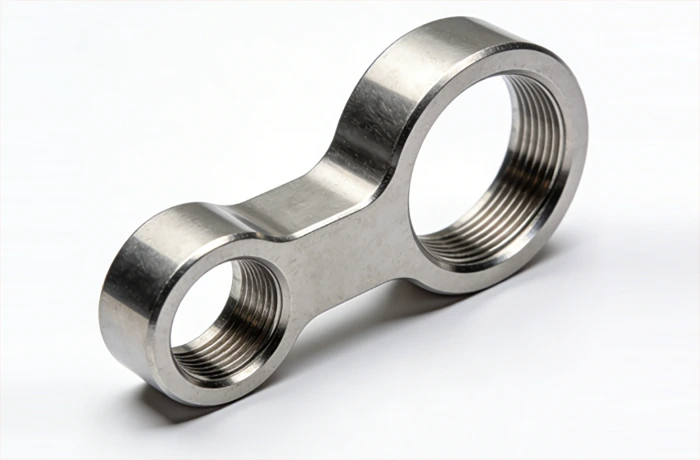
Titanium
Ti6Al4V (Grade 5 titanium alloy) is the flagship alloy material produced by the DMLS (Direct Metal Laser Sintering) process. The printed and heat-treated components of this alloy have mechanical properties comparable to those of the forged state, featuring excellent strength-to-weight ratio, outstanding biocompatibility, excellent corrosion resistance and high-temperature resistance. It is an ideal choice for achieving complex designs, extreme lightweighting and integration of high performance. The printed components usually require vacuum stress relief treatment to optimize performance. The following data are typical values under this condition.
- Outstanding strength-to-weight ratio: Achieving high strength with extremely lightweight materials, this feature is the preferred choice for lightweighting in aerospace and high-end equipment.
- Excellent biocompatibility and corrosion resistance: Can be used for long-term human implants and in harsh corrosive environments without the need for additional coatings.
- Excellent high-temperature performance and durability: Can maintain stable performance at higher temperatures, with high fatigue strength.
- High precision and design flexibility: Suitable for manufacturing complex topology-optimized structures and integrated components that cannot be achieved through traditional processes.