
SLA 3D Printing Services
 Fastest delivery within one day.
Supports high resolution and various materials.
Tolerance accurate to ±0.2 mm.
Fastest delivery within one day.
Supports high resolution and various materials.
Tolerance accurate to ±0.2 mm.





Our SLA 3D Printing Services
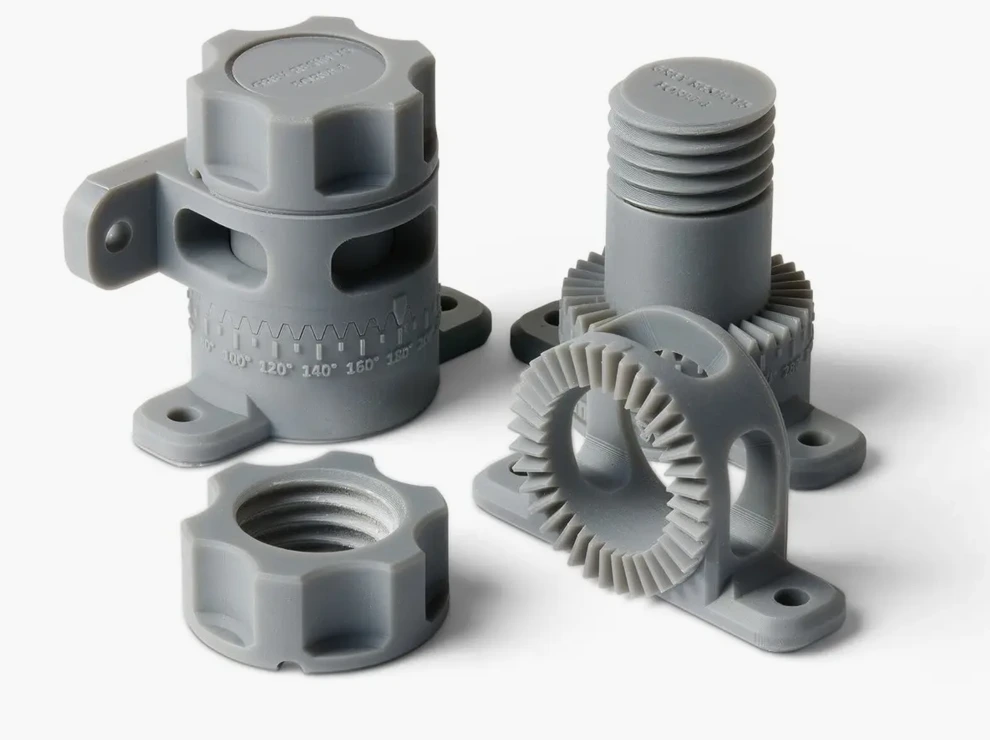
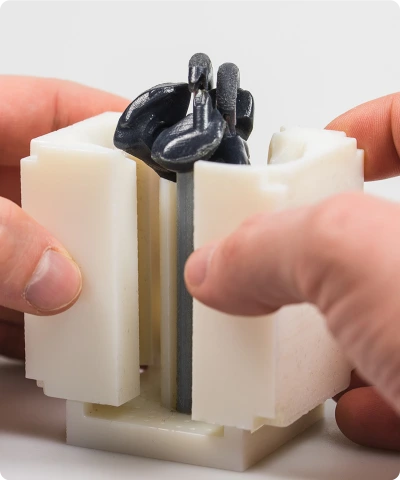
SLA (Stereolithography Apparatus) is a popular additive manufacturing process in resin 3D printing. It uses ultraviolet (UV) light to selectively scan a liquid photopolymer resin, initiating a polymerization reaction that transforms the resin from a liquid to a solid. By scanning the laser across each cross-sectional layer, parts are built layer by layer, resulting in high-precision components with detailed features and excellent surface finishes.
Production Capacity

1700mm*800mm*600mm

1-3 business days

±0.1-0.3mm/100mm

25-100 um
How does SLA 3D Printing Work?
SLA 3D Printing
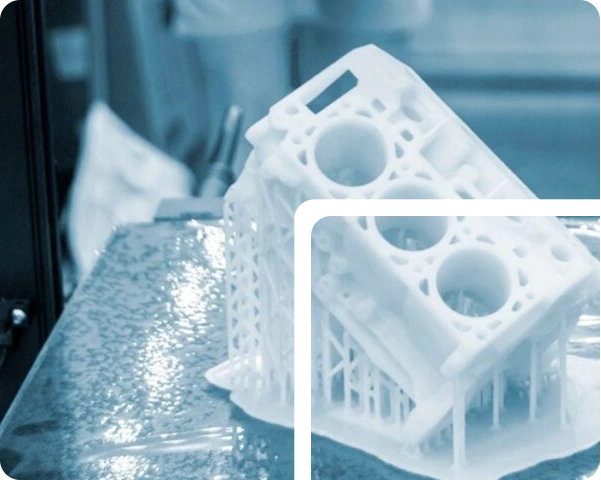

Before printing begins, engineers slice the 3D model and define appropriate layer thicknesses to achieve the
required precision and surface finish.
During SLA printing, a build platform is immersed in a tub of liquid photopolymer resin. Based on the sliced
model data, a UV laser beneath the tub selectively cures the resin surface, initiating a photopolymerization
reaction to form the first layer of the part.
After each layer cures, the platform is raised, and a recoating mechanism (blade/roller) applies a new,
uniform layer of resin. The laser then cures the resin again. This cycle repeats until the part is fully
formed, resulting in a highly detailed and dimensionally accurate assembly.
Advantages of HLH SLA printing

Shorter Delivery Cycles
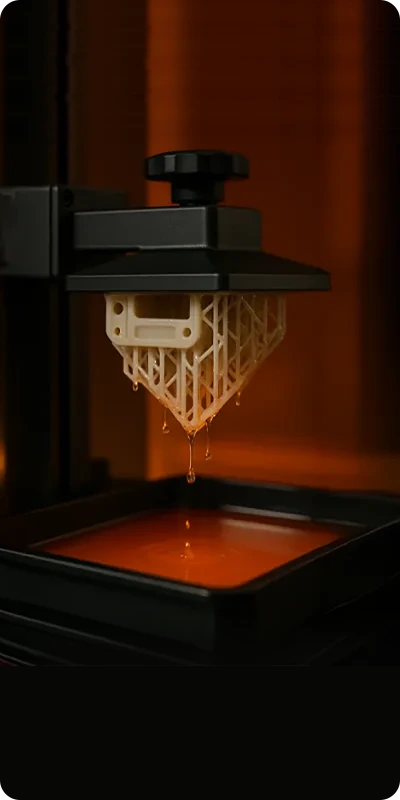
SLA typically offers higher forming efficiency and faster printing speeds for the same part compared to other 3D printing technologies such as FDM. It is particularly suitable for rapid prototyping and high-frequency iterative design processes.

Precise Printing Accuracy
SLA 3D printing layer thicknesses can be as small as 0.001mm, achieving extremely high printing accuracy and detail resolution. It is particularly suitable for prototypes and parts requiring high precision and surface quality.

Excellent Surface Finish
SLA 3D printed parts typically have a smooth surface finish, which reduces the complexity and time cost of post-processing to some extent. It is particularly suitable for prototypes or demonstration parts with high aesthetic requirements.

Complex Structural Designs
SLA 3D printing supports the manufacture of complex geometries, enabling the creation of overhangs, closed cavities, and smooth curved transitions—structures that are difficult to achieve with traditional manufacturing methods.
SLA Material Options
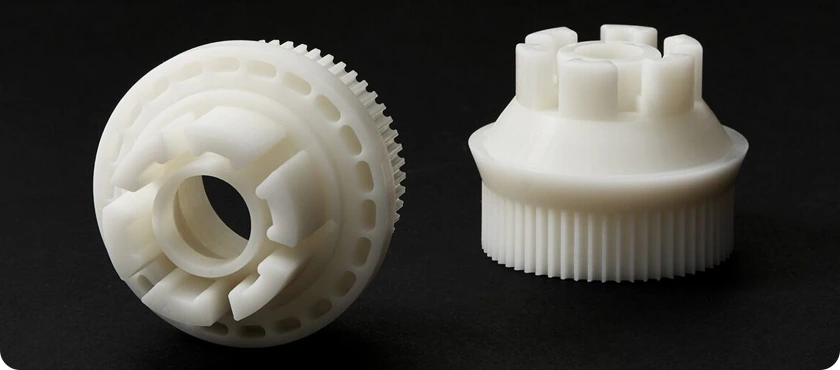
ABS-Like White is a widely used general purpose stereolithography material. In terms of flexibility and strength, this material falls between molded polypropylene and molded ABS, which makes it a good choice for functional prototypes.
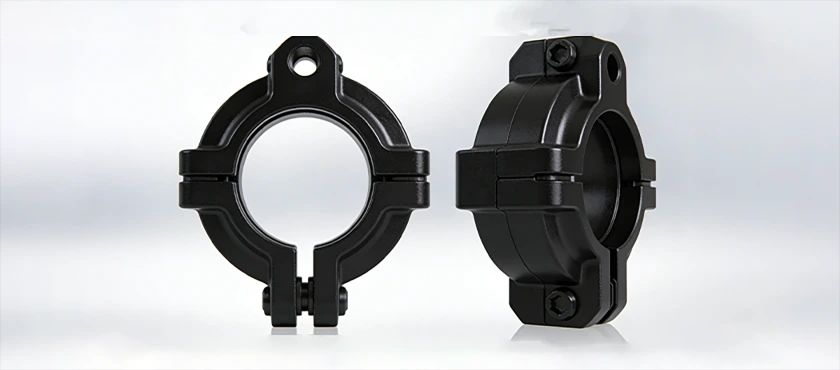
ABS-Like Black is a widely used general purpose material. Its deep black color and glossy up-facing surfaces in a top profile offer the appearance of a molded part, while layer lines may be visible in a side profile. Compared to other materials used for stereolithography, it has midrange values for all mechanical properties.
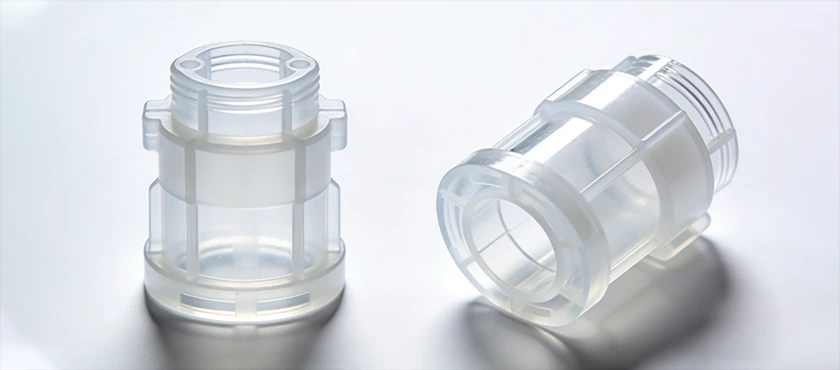
PP-Like Translucent White is the most flexible SLA option outside of Carbon RPU 70 and FPU 50. In direct comparison to the average values of an injection-molded polypropylene, 9120 has similar tensile strength, tensile modulus, flexural modulus, and impact strength.
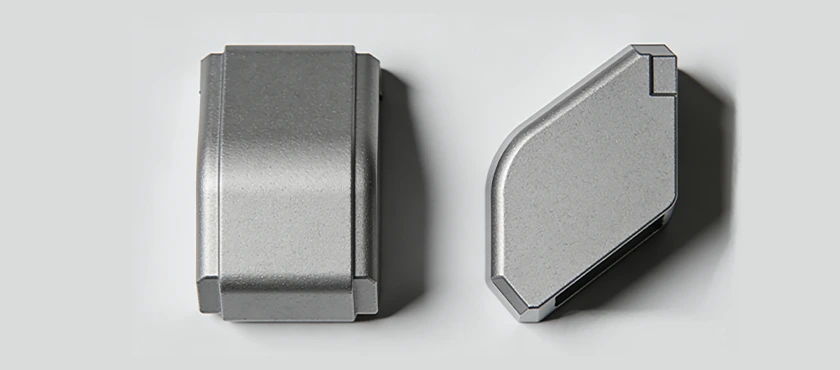
PC-Like Advanced High Temp creates strong, stiff parts with high temperature resistance. A thermal post-cure option can increase HDT as high as 482°F at 0.46 MPa loading.
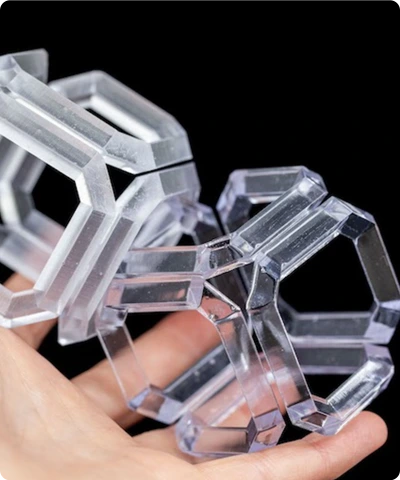
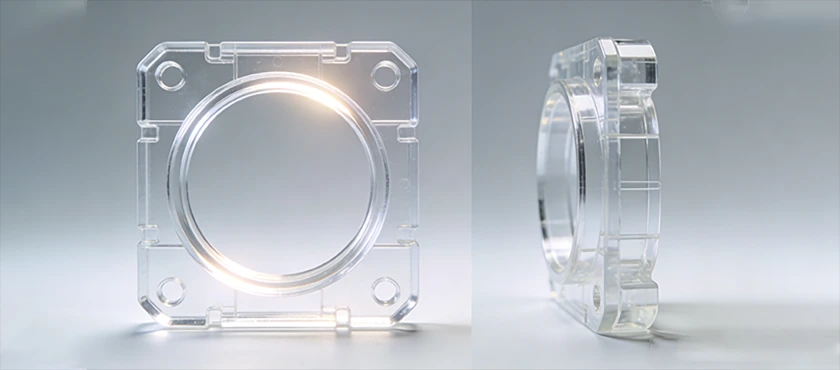
PC-Like Translucent/Clear is an alternative to the general purpose ABS-like materials and WaterShed XC 11122 when stiffness is desired. Like WaterShed, this material can be custom finished to achieve functional transparency with secondary processing.
SLA 3D printing post-processing
3D printing surface finishes enhance the appearance, texture, and performance of printed parts. From smoothing to coating, surface finishes improve aesthetics, durability, and functionality, preparing parts for final use or display.

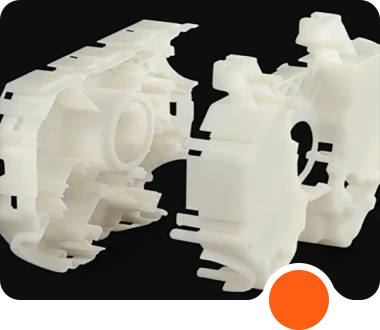
Cleaning
Residual resin is removed using organic solvents (such as isopropyl alcohol) and an ultrasonic cleaner, followed by drying.
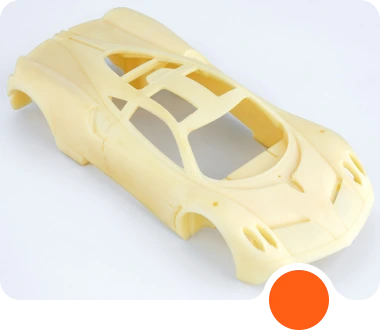
Sandblasting
Manual or mechanical methods are used to remove burrs and smooth the surface finish.
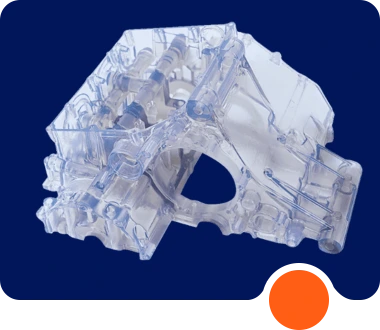
Post-Curing
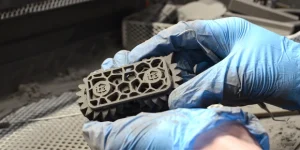
Printed parts are fully cured in a UV oven to enhance strength and stability.
Our Video Display

What Customers are Saying?

Fast and Reliable, Defnitely My First Choice!
"As the owner of a small machining shop, I'm deeply impressed by HLH Model Tech's effciency and reliability. They not only respond quickly tomy urgent needs but also deliver consistently high-quality parts.Especially their customer service team, who always swiftly resolves any issues I face. It's truly a hassle-free experience!"


Custom Transmission Belts, Perfectly Matched!
“HLH Model Tech has exceeded our expectations in delivering high-quality CNC machined parts. Their professional skills and processing production capabilities have seamlessly connected our production needs. ”

Worth Every Penny!
"When choosing suppliers, value for money is always my top consideration. HLH Model Tech not only offers reasonable prices but also ensures exceptional quality. Their team is adept at balancing cost- effectiveness, consistently delivering results that exceed expectations within our budget. They are a lifesaver for our financial planning!"


Request A Quote
Please place file(s) for transfer in the same folder and ZIP or RAR before attaching.
Larger
attachments can
take a few minutes to transfer depending on your local internet speed 🙂
Recent Articles / Blogs
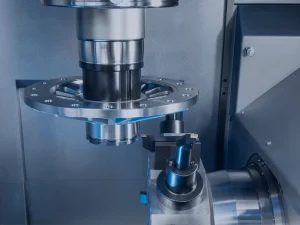
CNC turning services have significant usage in the manufacturing sector; despite that, the inefficiency that pertains to the aspects of quality, on-time delivery, or cost with regard to turning projects is an issue that many organizations face today.