



ABS
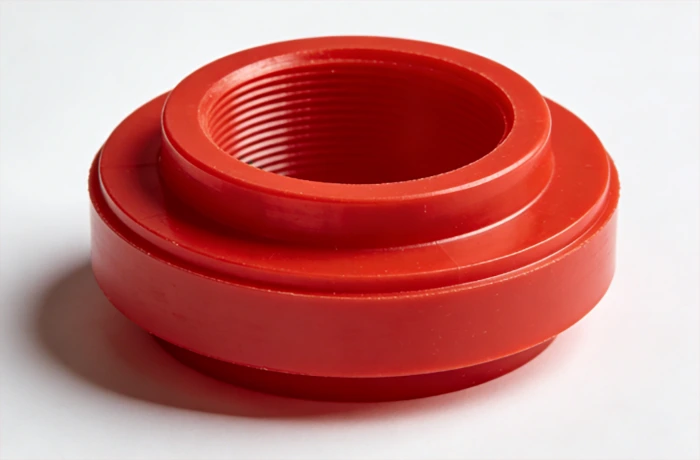
ABS is a general-purpose engineering plastic with balanced comprehensive performance and outstanding cost-effectiveness. It possesses excellent strength, rigidity and impact resistance, and is easy to be processed and molded through injection molding and other methods. It also supports various post-processing techniques such as spraying and bonding, and is widely used in structural components and appearance parts that have comprehensive requirements for mechanical properties, appearance and cost.
- Excellent mechanical performance balance: While maintaining high strength and stiffness, it also possesses excellent impact toughness.
- Excellent processing performance and cost-effectiveness: Good injection molding fluidity, short molding cycle, suitable for large-scale production.
- Easy for post-processing and surface decoration: The surface is suitable for secondary processing such as spraying, printing, and electroplating, and has good bonding performance.
- Excellent dimensional stability: Low shrinkage rate, good consistency in the dimensions of formed parts, suitable for precise assembly.
Nylon 6
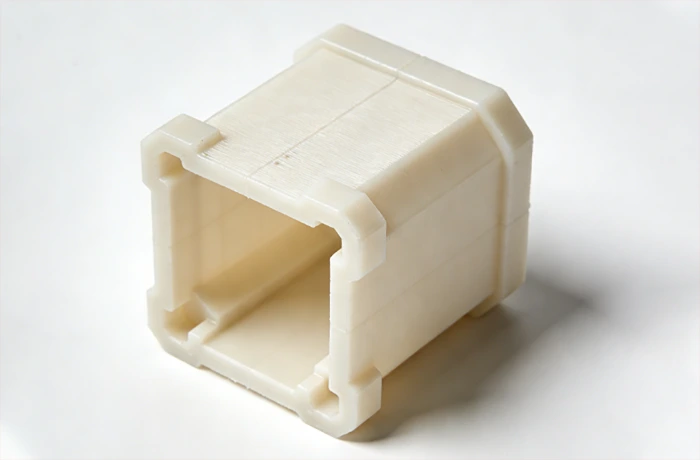
Polyamide 6 is an engineering plastic with excellent comprehensive properties. It is renowned for its outstanding wear resistance, high mechanical strength and good heat resistance. This material possesses high tensile strength, high modulus and excellent balance of toughness, and is particularly suitable for mechanical components that need to withstand high wear, high loads and repeated movements.
- Excellent wear resistance and low friction coefficient: Suitable for high-maintenance moving parts such as bearings and gears, which can extend their service life.
- High mechanical strength and rigidity: Possessing excellent tensile strength and elastic modulus, it can withstand high static and dynamic loads.
- Excellent heat resistance: It can maintain stable performance in high-temperature environments and has outstanding short-term temperature resistance.
- Certain chemical resistance and easy processability: Resistant to various oils and chemicals, and with good plastic injection processing fluidity.
Polycarbonate (PC)
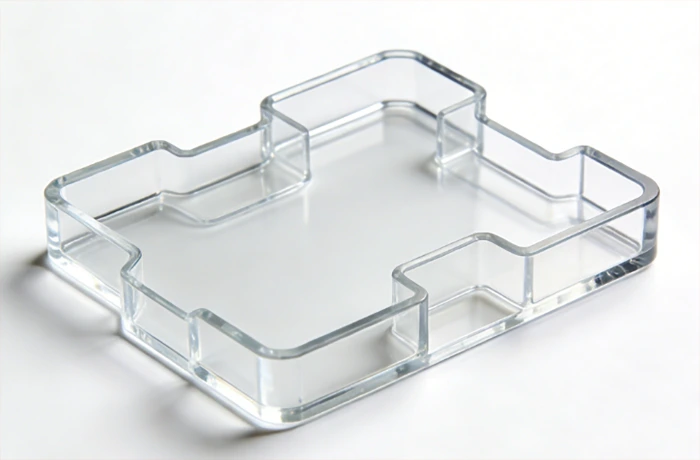
Polycarbonate (PC) is a high-performance engineering plastic, renowned for its excellent impact strength, high transparency, and good dimensional stability. This material maintains stable mechanical and electrical properties over a wide temperature range, featuring low moisture absorption, high rigidity, and good flame retardancy. It is an ideal choice for applications requiring high transparency, high impact resistance, or strict electrical insulation.
- High transparency and high impact resistance: Among transparent engineering plastics, it exhibits excellent impact resistance and is suitable for applications that require both light transmission and impact resistance.
- Excellent dimensional stability and low hygroscopicity: It undergoes minimal deformation under changes in temperature and humidity, making it suitable for precision structural components and outdoor applications.
- Excellent flame retardancy and electrical insulation: Complies with multiple flame retardant grades and is suitable for electrical and electronic enclosures and insulation components.
- High rigidity and easy processing: It has a high elastic modulus and can be molded through injection molding, extrusion, etc., and supports post-processing such as spraying and coating.
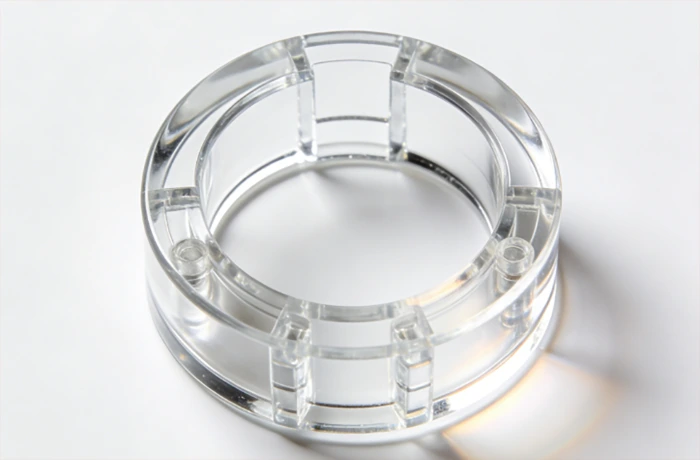
PMMA (Acrylic)
PMMA (commonly known as acrylic or plexiglass, with trade names such as Plexiglas™) is an engineering plastic with high transparency and surface hardness. It has excellent optical transparency, outstanding weather resistance and UV resistance, and is lightweight and not prone to cracking. It is an ideal material for replacing glass in achieving lightweight designs, complex shapes, and high safety requirements for transparent applications.
- Excellent optical transparency and glossiness: The light transmittance can reach over 92%, with a good surface gloss. It won’t yellow over a long period of use.
- Outstanding weather resistance and UV protection properties: Even after long-term outdoor use, it can maintain transparency and mechanical properties, which are far superior to ordinary glass and most plastics.
- High surface hardness and stiffness: Excellent wear resistance and scratch resistance, strong rigidity, but low toughness, belonging to brittle materials.
- Lightweight, safe and easy to shape: The density is only half that of glass. When broken, it is less likely to produce sharp fragments. It can be molded through various processes such as injection molding, extrusion, and casting.
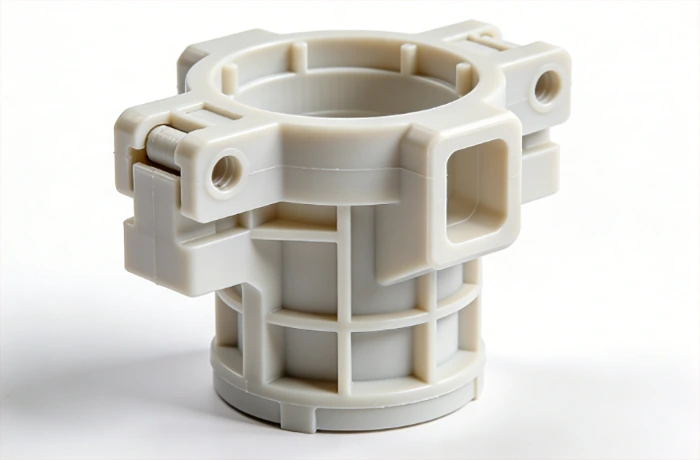
PP Copolymer
Polypropylene copolymer is a versatile thermoplastic plastic that combines excellent impact resistance, good chemical resistance and high cost-effectiveness. By introducing ethylene copolymer monomers, its low-temperature toughness is significantly enhanced, overcoming the brittleness problem of homopolymer PP. At the same time, it maintains excellent processing fluidity, fatigue resistance and food safety compliance characteristics, making it a cost-effective material widely used in durable consumer goods, packaging and automotive components.
- High toughness and impact resistance: It can maintain good toughness even in low-temperature environments, is resistant to drops and vibration fatigue, and is not prone to stress cracking.
- Excellent chemical resistance: It has good resistance to most acids, alkalis, salts and organic solvents, and is suitable for various chemical containers and pipelines.
- Outstanding cost-effectiveness and ease of processing: low raw material cost, fast molding cycle, suitable for large-scale production.
- Food safety and compliance: Meets standards of FDA, EU, etc., suitable for food contact and medical packaging.
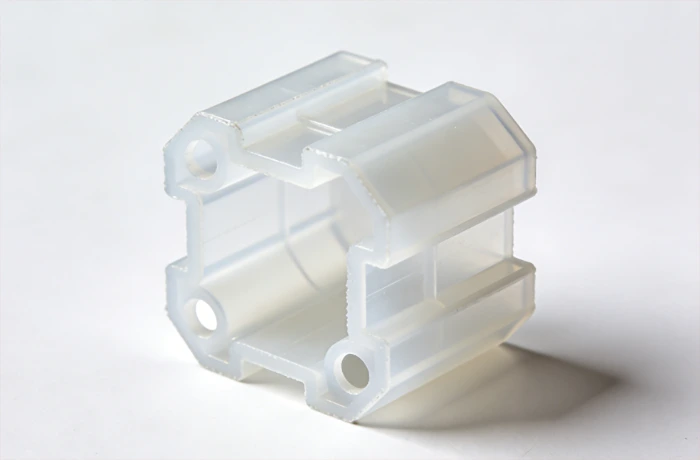
PVC
Polyvinyl chloride (PVC) is a versatile and cost-effective engineering plastic, renowned for its excellent chemical resistance, good mechanical strength and outstanding flame retardancy. It can be flexibly adjusted through formulation (such as adding plasticizers) to achieve performance changes from hard to soft, and is widely used in various fields such as construction, electrical engineering and medicine.
- Excellent corrosion resistance and flame retardancy: It has good tolerance to various chemicals such as acids, alkalis, and salts, and also possesses excellent flame retardant properties (up to UL94 V-0 level).
- Excellent mechanical properties and cost-effectiveness: High strength-to-weight ratio, low raw material cost, and outstanding economic performance.
- Excellent processability and weather resistance: It can be easily molded through processes such as extrusion, injection molding, and calendering. By adding stabilizers, its outdoor resistance to ultraviolet aging can be enhanced.
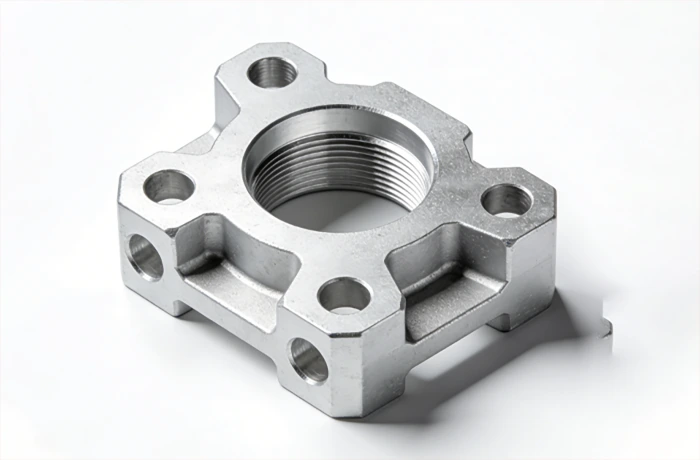
Aluminum 6061-T651/T6
6061 aluminum alloy is a highly versatile and well-balanced aluminum alloy grade. It is renowned for its excellent strength, superior machinability, weldability, and corrosion resistance. T6 and T651 are common heat treatment states for this alloy. Through solution treatment + artificial aging, the material’s strength is significantly enhanced and internal stress is eliminated. It is widely used in aerospace, automotive manufacturing, shipbuilding industries, and general machinery fields.
- Excellent comprehensive mechanical properties: Achieve a good balance among strength, toughness and fatigue resistance.
- Excellent corrosion resistance: Especially in the T6 state, it has a good anti-corrosion ability and is suitable for various environments.
- Excellent machinability and weldability: Easy to machine, weld and undergo various surface treatments.
- Higher cost-effectiveness: While meeting the high-performance requirements, it also offers excellent economic efficiency.
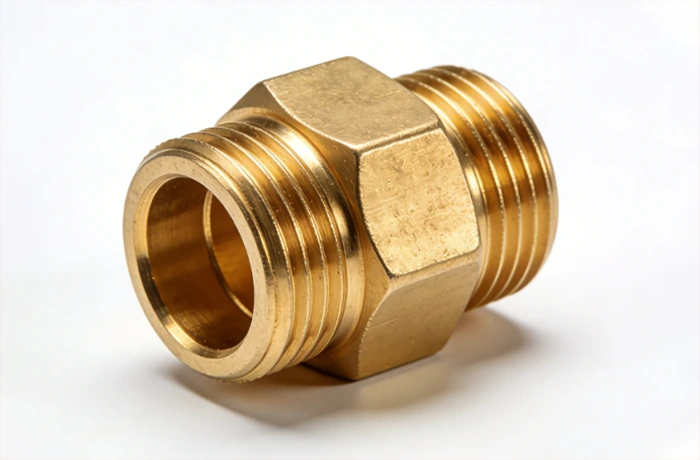
Brass C260
C260 brass (with nominal composition of CuZn30, commonly known as cartridge brass or 73 brass) is a single-phase α brass with approximately 70% copper content and 30% zinc content. It possesses excellent cold working formability, good corrosion resistance, outstanding cutting performance, and similar tensile strength to low-carbon steel. It is regarded as one of the most versatile brass alloys and is widely used in complex parts that require high formability, electrical conductivity, thermal conductivity, or corrosion resistance.
- High ductility and cold formability: The single-phase α structure endows it with excellent plasticity, making it suitable for cold processing techniques such as deep drawing, stretching, and forging.
- Excellent cutting performance: Good chip-breaking performance, allowing for high-speed machining, low tool wear, extremely low demand for coolant, and it is a typical “fast-cutting” material.
- Excellent corrosion resistance: It has good resistance to corrosion in the atmosphere, fresh water and various media, and the surface can easily form a protective oxide film.
- Overall mechanical properties are excellent: While maintaining high ductility, its tensile strength is comparable to that of many low-carbon steels.
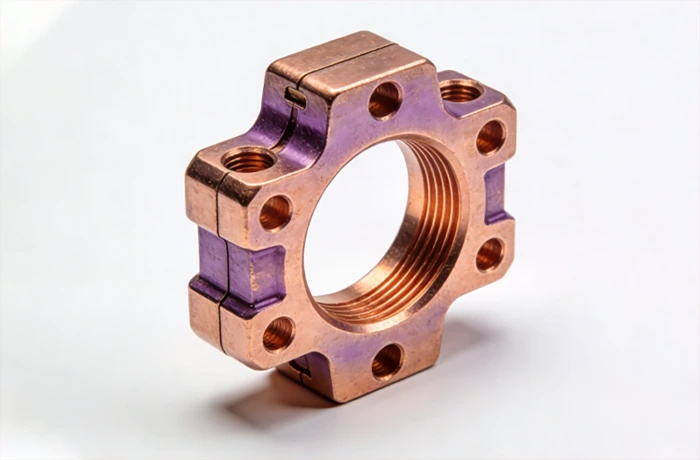
Copper C101
C101 copper (also known as HC copper or oxygen-free high-conductivity copper) is a highly pure copper material with extremely high electrical and thermal conductivity (nominal conductivity 100% IACS). This material possesses excellent ductility, corrosion resistance, and good processing properties, making it an ideal choice for electrical and electronic applications, thermal management, and high-formability precision parts.
- Extremely high electrical and thermal conductivity: Among all commercial pure copper, it has the highest electrical conductivity, making it the benchmark material for electrical transmission and heat dissipation applications.
- Excellent ductility and formability: Capable of undergoing complex cold processing such as deep drawing, stretching, and bending, and easy to shape into intricate and complex forms.
- Excellent corrosion resistance: Exhibits stable corrosion resistance in air, fresh water and various environments.
- Weldable and easy to process: Suitable for various welding methods, with excellent machining performance.
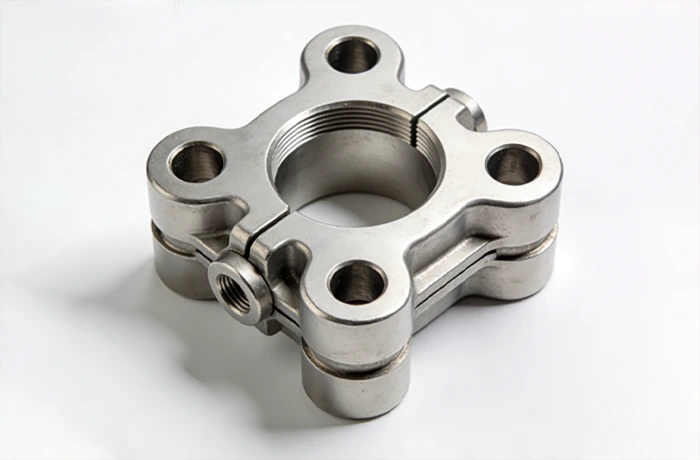
Stainless Steel 316
316 stainless steel is an austenitic stainless steel with a molybdenum (Mo) content of approximately 2-3%. Due to its outstanding corrosion resistance (especially against chloride and acidic media), it has become an upgraded option for 304 stainless steel. While maintaining good machinability, weldability, and comprehensive mechanical properties, it performs more reliably in chemical, marine, and high-demand industrial environments.
- Outstanding corrosion resistance: Thanks to the addition of molybdenum (Mo), its resistance to pitting corrosion and crevice corrosion is significantly superior to that of 304 stainless steel, especially in marine and chemical environments containing chloride.
- Good machinability and weldability: It can be machined and welded using standard methods, and the post-welding performance is stable.
- Excellent comprehensive mechanical properties: featuring high strength, high ductility and excellent low-temperature toughness.
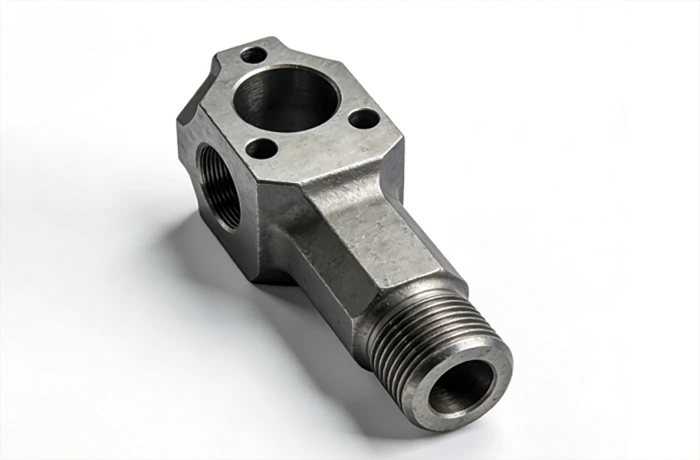
Steel Alloy 4140
Steel alloy 4140 is a medium-carbon chromium-molybdenum-manganese low-alloy steel (quenched and tempered steel), renowned for its excellent balance of strength, toughness, fatigue resistance and wear resistance. Through proper quenching and tempering heat treatment, its mechanical properties can be significantly enhanced, making it an ideal material for high-stress structural components such as shafts, gears, and molds.
- High strength and excellent toughness combined: After quenching and tempering treatment, the best match of high tensile strength and high impact toughness can be achieved.
- Excellent fatigue resistance and wear resistance: Suitable for dynamic load components that are subjected to alternating loads and friction.
- Excellent hardenability: The addition of chromium and molybdenum significantly increases the hardenability of the material, enabling uniform and excellent performance to be achieved even for large-section parts.
- Better machinability and weldability: It is easy to machine in the annealed state. During welding, preheating and post-weld heat treatment should be taken into consideration.
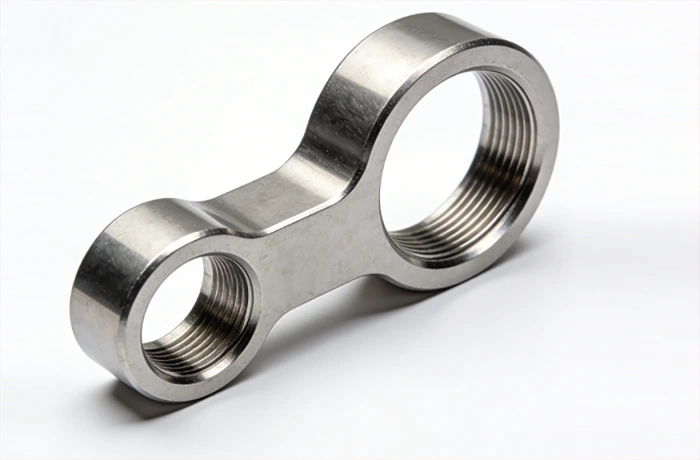
Titanium
Titanium is a high-performance metal, renowned for its outstanding specific strength (strength-to-weight ratio), excellent corrosion resistance, superior biocompatibility, and good high-temperature properties. It maintains high strength while having a much lower density than steel, with a low thermal expansion coefficient and an extremely high melting point. It is an ideal material for aerospace, chemical industries, healthcare, and high-end consumer goods. However, the processing difficulty and cost of titanium are usually higher than those of aluminum and steel.
- Extremely high specific strength: Among all engineering metals, its strength-to-weight ratio (specific strength) ranks among the highest, making it the top material for achieving lightweighting.
- Outstanding corrosion resistance: It possesses excellent corrosion resistance in seawater, chloride solutions, and various strong acids and strong bases, far superior to stainless steel.
- Excellent high-temperature performance: It can maintain stable performance at temperatures up to 1000°F (approximately 538°C), with a melting point close to 3000°F (approximately 1660°C).