



Aluminum alloy
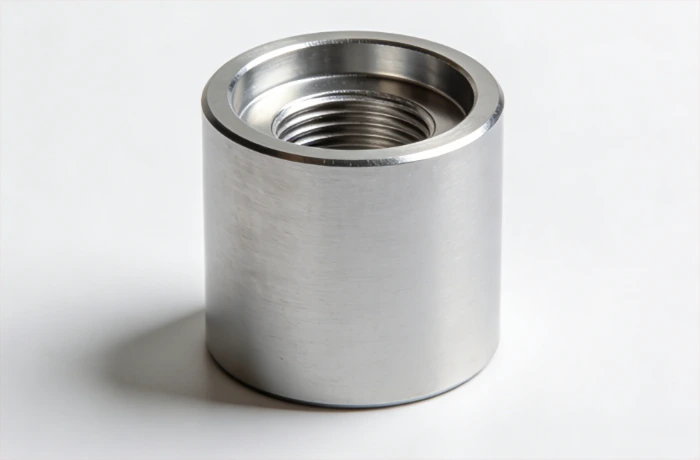
Aluminum alloy is a metal material formed by adding elements such as copper, magnesium, silicon, and zinc to pure aluminum. Due to its outstanding lightweight property, good specific strength, excellent thermal and electrical conductivity, and excellent processing performance, it has become one of the most widely used non-ferrous metals. Through alloying and heat treatment, it achieves the performance coverage from ordinary structural components to high-strength and high-toughness parts while maintaining the advantage of lightweight.
- Excellent lightweight and strength-to-weight ratio: The density is only about one-third that of steel. Through alloying and heat treatment, the strength can approach that of some steel materials, making it the preferred material for lightweight design.
- Excellent thermal and electrical conductivity: It has outstanding thermal and electrical conductivity, second only to copper, and is commonly used as a material for thermal management(heat sinks) and electrical conductors (wires).
- Outstanding processing performance: Excellent casting fluidity (especially for silicon-aluminum alloy series), excellent cutting processing performance, and easy for extrusion, rolling, forging and precision processing.
- Excellent corrosion resistance and surface treatment adaptability: The surface can naturally form a dense oxide film, resisting atmospheric corrosion; it is easy to undergo treatments such as anodizing, electrophoretic coating, and spraying to obtain decorative or functional surfaces.

Zinc alloy
Zinc alloy is one of the most commonly used and cost-effective metal materials in die-casting processes. It is renowned for its excellent casting fluidity, high dimensional stability, good mechanical strength, and outstanding surface treatment performance. It is particularly suitable for mass production of complex-structured, high-precision components with excellent appearance requirements.
- Excellent die-casting performance and economic benefits: Low melting point, excellent fluidity, capable of filling complex thin-walled cavities, fast forming cycle, long mold life, and low overall manufacturing cost.
- Excellent mechanical strength and hardness: At room temperature, it possesses strength and hardness that are close to or exceed those of some aluminum alloys, meeting the load-bearing requirements of most structural components.
- Outstanding surface treatment adaptability: The casting surface quality is excellent, allowing for various treatments such as electroplating, spraying, sandblasting, etc., making it easy to achieve an advanced metallic appearance.
- High dimensional accuracy and stability: The solidification shrinkage rate is low, the casting dimensions are precise, and the deformation is minimal over a long period of use.
Magnesium alloy
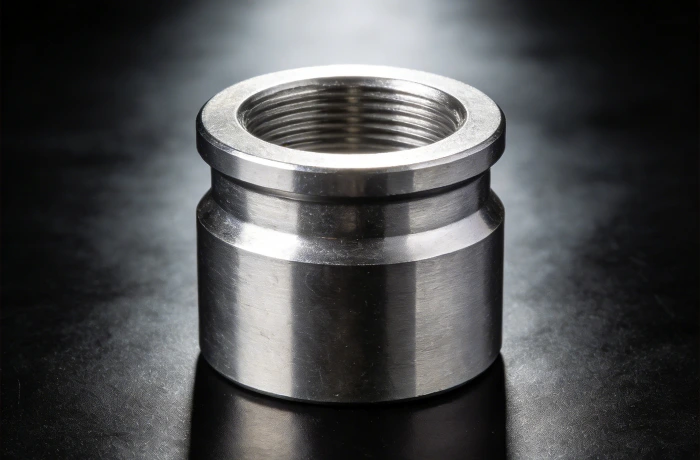
Magnesium alloy is currently the lightest metal structural material for engineering applications. It is renowned for its extremely high specific strength, excellent casting fluidity, and good shock absorption and electromagnetic shielding properties. It is particularly suitable for producing complex-shaped, thin-walled, and lightweight parts through processes such as die casting. This enables lightweighting while meeting the requirements for structural strength.
- Extremely high specific strength and lightweight: The density is approximately two-thirds that of aluminum and one-fourth that of steel. At the same weight, it can provide higher structural strength.
- Excellent die-casting performance: Low melt viscosity and good fluidity, easy to fill complex cavities, suitable for manufacturing thin-walled and structurally complex parts.
- Excellent shock absorption and heat dissipation performance: It can effectively absorb vibrations and noises; excellent heat conduction properties, facilitating heat management.