



ABS- Like
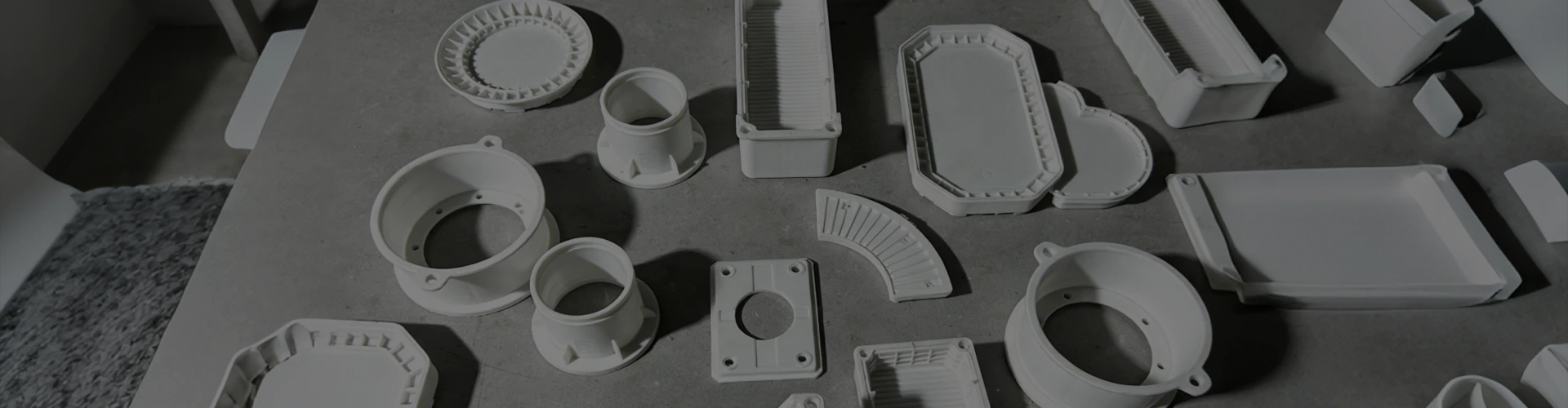
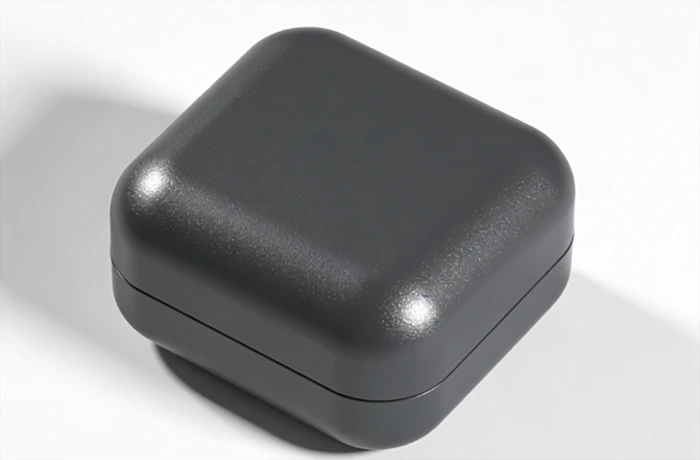
ABS-Like is a polyurethane-based material specifically designed for rapid prototyping, aiming to replicate the appearance, feel, and basic mechanical properties of mass-produced injection-molded ABS plastic. It is not a true thermoplastic ABS but rather a resin system formed through casting or specific 3D printing processes (such as PolyJet, some photopolymerization). It is mainly used for functional verification, assembly testing, and appearance review during the product development stage.
- Appearance and feel simulation: It can present a surface texture, glossiness and color very similar to injection-molded ABS.
- Good structural strength: It has sufficient rigidity, impact resistance and dimensional stability, suitable for making functional prototypes that can be assembled and demonstrated.
- Processing convenience: It is suitable for rapid prototyping processes and can efficiently manufacture complex shell prototypes.
- Limitations: Its long-term durability, chemical resistance and thermal properties usually differ from those of real ABS. It is mainly applicable in the prototype stage rather than for the final product.

Acrylic- Like
Acrylic-Like is a polyurethane-based material specially developed for prototype production, aiming to simulate the high transparency, surface hardness and optical properties of real injection-molded acrylic (PMMA). It is not the actual thermoplastic PMMA but a resin material manufactured through rapid prototyping processes (such as casting or photopolymerization), mainly used for verifying the appearance, optical effect testing and assembly assessment of transparent or light-transmitting components in the product development stage.
- High transparency and optical simulation: Can achieve a light transmittance and visual clarity close to PMMA, suitable for the preliminary verification of light guiding and uniform light distribution effects.
- Good surface hardness and rigidity: Possesses a high surface hardness and rigidity, with a feel similar to real acrylic.
- Rapid prototyping and design freedom: Suitable for manufacturing complex transparent prototype parts without the need for mold making.
Opaque elastomer
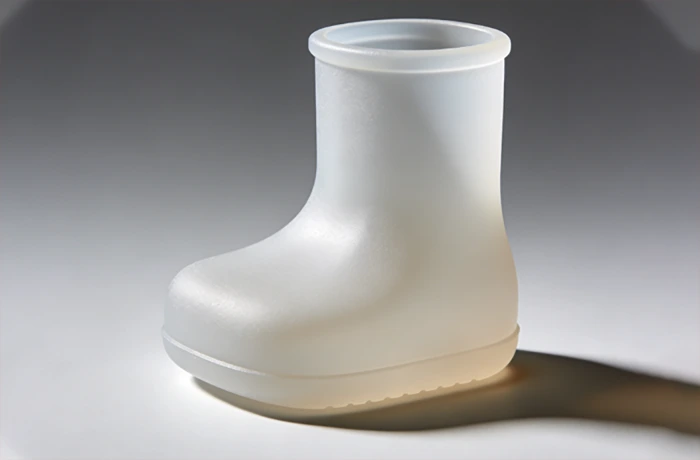
Opaque elastomer is a polyurethane material specifically designed for prototype and model production, aiming to replicate the feel, elasticity, and appearance of real rubber or thermoplastic elastomers (such as TPE, TPU, and silicone rubber). It is manufactured through rapid prototyping processes such as casting or photopolymerization, and is mainly used for the design verification, tactile assessment, and assembly testing of components requiring flexibility, cushioning, or sealing functions during the product development stage.
- Tactile and mechanical simulation: Adjustable hardness (typically ranging from Shore A 30 to 90), simulating various elastomer tactile sensations and compression rebound characteristicsfrom soft silicone to hard TPU.
- Excellent molding performance and detail reproduction: Suitable for manufacturing flexible prototype parts with complex shapes, textures or thin walls.
- Fast iterative verification: Obtain samples with functions and appearances close to the final design without the need for mold production, significantly shortening the development cycle.
Waterclear Elastomer
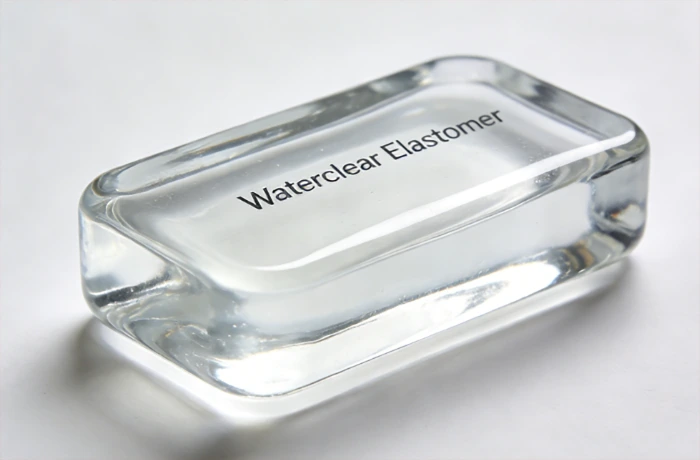
Waterclear elastomer is a transparent and flexible material formed through the polyurethane casting process. It is designed to precisely simulate the optical properties, elastic mechanical performance, and surface texture of real transparent or semi-transparent rubber/elastomers (such as transparent TPU, silicone rubber, and some soft TPE). It is an ideal choice for creating verification prototypes, display models, and small-batch customized parts that combine flexible functions with requirements for transparency or light transmission.
- Excellent combination of optical transparency and elasticity: While maintaining from soft to medium hardness (Shore A typical range is approximately 40-80), it offers excellent light transmittance, suitable for optical application prototypes that require flexibility.